How Often Should a Log Burner Chimney Be Swept?
For a log burner burning wood, HETAS recommends chimney sweeping at least twice a year. Do not assume a generic “once a year” answer covers your stove: agree the interval with a professional sweep who knows your installation and how you use it.
That is relevant locally too. In its 7 September 2026 chimney-safety advice, Mid and West Wales Fire and Rescue Service advises at least two sweeps a year, including before autumn and winter use. These are maintenance recommendations, not a claim that one calendar schedule guarantees safety or satisfies every insurance policy.
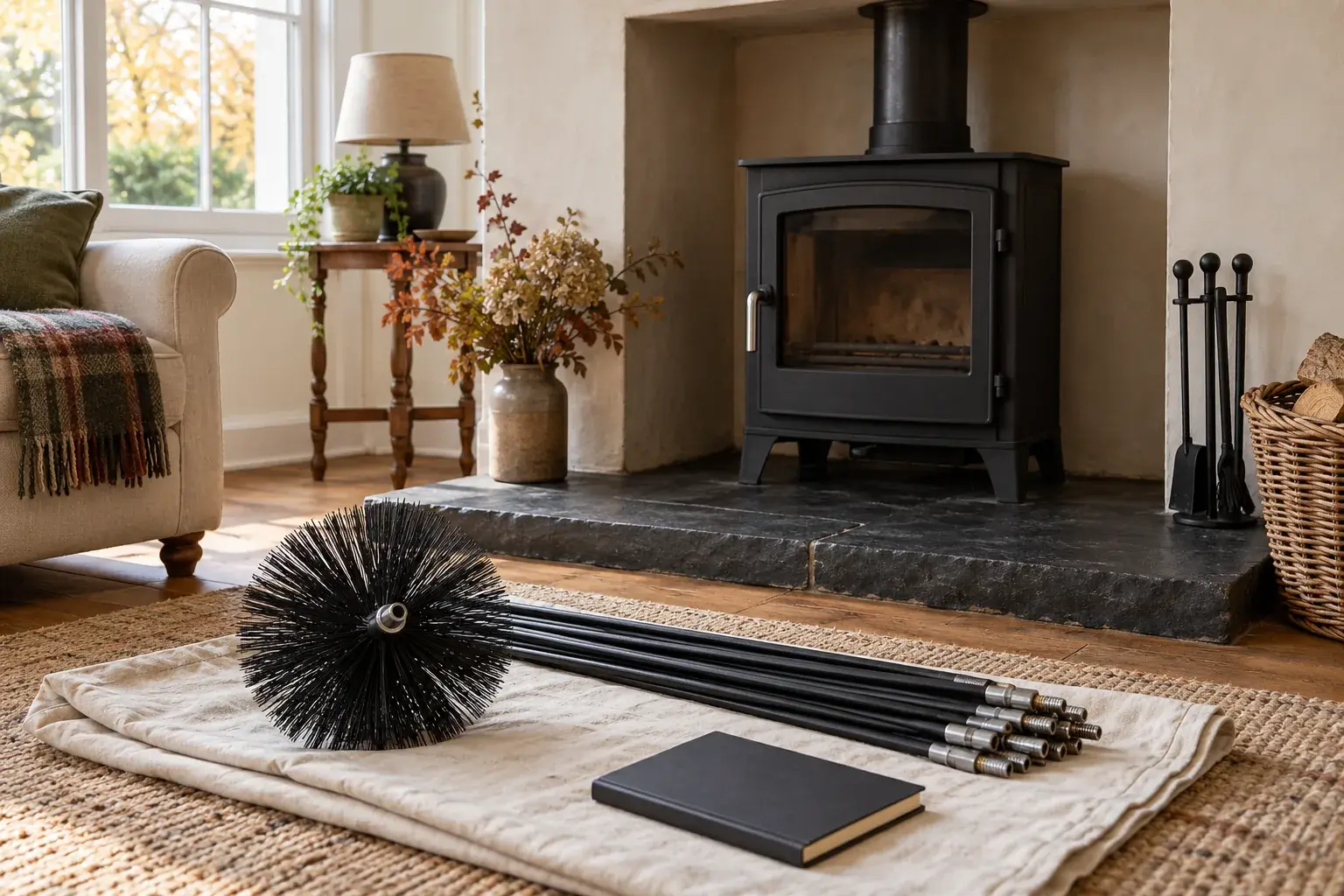
The image is an original editorial concept illustration, not a photograph of customer work or a DIY sweeping demonstration.
Why do some answers say once a year?
The fuel matters. HETAS's frequency guidance distinguishes wood, for which it recommends at least twice yearly, from smokeless fuels, for which it recommends at least once yearly. A headline about “chimneys” can lose that distinction.
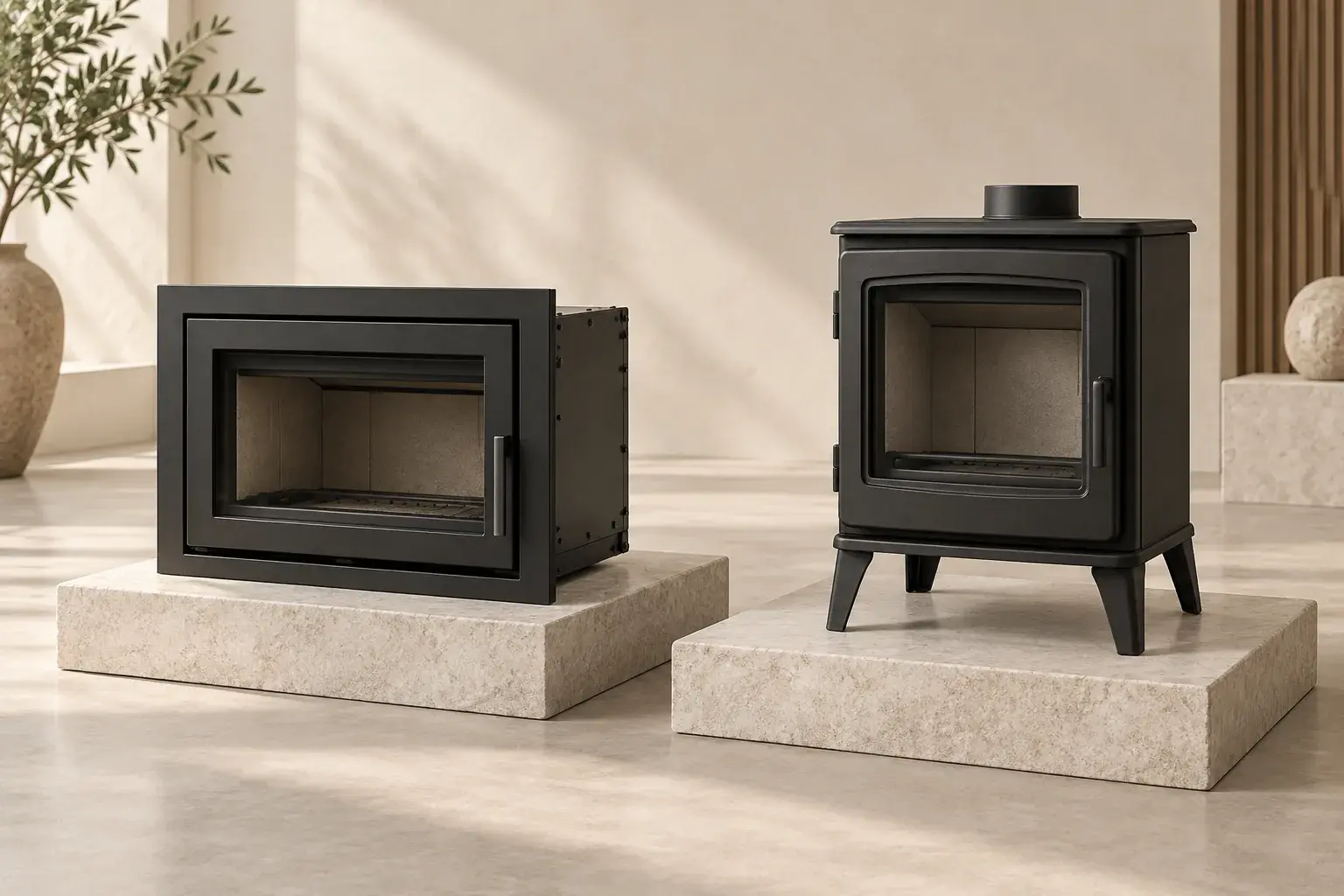
A multi-fuel stove does not automatically belong in the annual category: tell the sweep what you actually burn. If you are still choosing an appliance, our wood-burning versus multi-fuel stove comparison explains that separate purchase decision.
Treat the published interval as a starting point for a conversation, not permission to ignore the appliance instructions or a recommendation for more frequent attention. HETAS's Chimney Sweeping Code requires its registered technicians to advise on frequency appropriate to the installation, fuel and pattern of use.
Plan around use, not just an anniversary
HETAS suggests sweeping before the heating season and, where sweeping twice yearly, again after the peak of the main heating season. It also highlights restarting after a prolonged period without use. The Welsh fire service similarly advises a sweep before using a chimney that has been idle for some time.
Rather than choosing two arbitrary dates six months apart, describe your intended heating season when booking. Ask whether those timings suit your household or whether an earlier visit is needed.
For example, imagine a household that previously lit its stove on occasional weekends but now plans to use it every evening. This is an illustrative planning scenario, not a customer case. The useful message to the sweep is “our use is changing”, rather than “please repeat last year's booking”. Ask them to review the schedule before relying on it for the new routine.
If you have moved in and cannot establish the maintenance history, arrange professional advice before using the stove. Do not treat an old receipt or a recently fitted liner as a complete account of its present condition.
Book the right work: sweep, service or installation assessment?
These are different questions to put in the booking:
- Chimney sweeping: what cleaning and checks are included for this flue?
- Stove servicing: is appliance servicing included, or does it need a separate appointment?
- Changing the installation: if a stove or liner is being replaced, what additional suitability assessment is required?
HETAS recognises sweeping and servicing as separate competences, which a technician may hold individually or together. Its code also requires a sweeping certificate and, where servicing takes place, a servicing record. Confirm the scope rather than assuming the word “maintenance” includes everything.
For the separate question of whether an existing chimney can take a proposed stove, read our chimney-liner assessment guide for Wales. A routine sweep booking is not a substitute for agreeing the scope of a new installation.
A booking note you can copy
Gather these details before contacting a sweep. Unknown answers are worth flagging rather than guessing:
- Stove make and model, with a photograph if the label is difficult to identify.
- Fuel actually used, and any planned change.
- Typical use: occasional evenings, most evenings or longer daily periods.
- Last known sweep and service dates; any previous reports or outstanding recommendations.
- Whether the stove has been unused for a long period.
- Whether you need sweeping only or want a price for servicing too.
Then ask: “What interval do you recommend for this use, what is included, and what should happen before the stove is used again?”
Keep the completed record with the appliance instructions. Add the recommended next appointment to your calendar, along with any separate actions, so a reminder does not hide unfinished work. Check your own insurer's wording rather than relying on a general statement online about cover.
Buying a stove? Include upkeep in the plan
Before accepting an installation quote, ask how the flue will be accessed for cleaning, which operating and maintenance instructions will be handed over, and who to contact for subsequent sweeping and servicing. These are useful ownership questions even when two stoves look very similar.
Smart Space Living provides log burner installation in South Wales. If you are planning a new or replacement stove, check our service areas and request an installation quote, including your fireplace photographs and any existing stove or flue paperwork. For routine sweeping, book an appropriately competent chimney sweep and confirm their service scope directly.